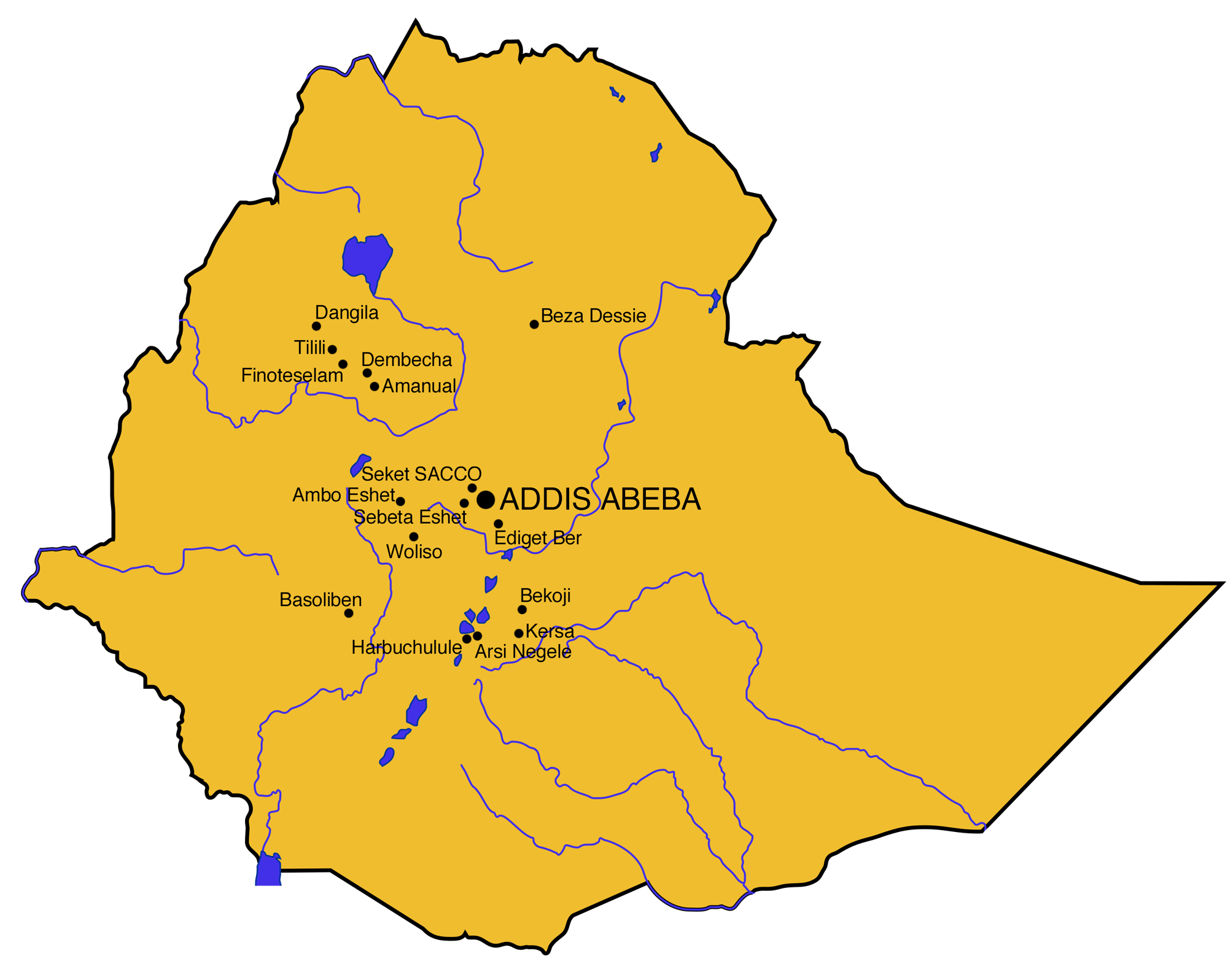
Ethiopia
The program trains people—mainly women—to become self-sufficient entrepreneurs, helping families secure sustainable livelihoods. Agriculture remains a vital income source, with coffee offering the greatest potential for long-term stability. However, most farming is subsistence-based, and land overuse, poverty, and climate extremes reduce arable land and job opportunities.
Despite appearing close on maps, the program regions are separated by poor infrastructure, especially in the rainy season. Reaching markets often requires hours of walking. Ongoing droughts and floods further threaten food security. Many men return unemployed after military service, leaving women to support the family alone.
Only about half of Ethiopian children finish primary school, often pulled into work early. Swisshand’s training enables women to earn income, so their children can stay in school.
A pilot project in Addis Ababa’s slums targets extreme poverty among the capital’s 4.4 million residents. With local collaboration and Swisshand’s support, families gain the tools for lasting change.